
 EN
EN
How Viscosity Determines Fill Machine Automatic Suitability
Viscosity Ranges: From Thin Liquids to Thick Pastes
When talking about fill machines, viscosity matters a lot. Measured in centipoise (cP) or millipascal seconds (mPa·s), this property basically tells us how fluids act inside automated filling systems. Take water at around 1 cP - it just pours right out on its own. But something thick like toothpaste needs way more force to get moving since it sits around 100,000+ cP. Think about it: juices and oils tend to flow pretty fast through most equipment, while things like creams and gels really fight against being moved because of all that internal friction. The difference in these numbers makes all the difference when choosing equipment too. Gravity fillers work fine for those runny liquids, but when dealing with thicker substances, manufacturers need specialized setups like piston or auger systems. Get this wrong? Well, expect problems like incomplete fills, wasted product sitting around the nozzles, and extra wear and tear on machinery that wasn't designed for such thick materials.
Why Viscosity Affects Fill Accuracy, Cycle Speed, and Maintenance Frequency
When dealing with high viscosity materials, flow rates naturally drop off, which means production cycles take anywhere from 15 to 40 percent longer than they do with thinner substances. Sticky products such as honey tend to stick around in nozzles and valves, leading to uneven dispensing amounts. This creates problems for meeting regulations regarding proper fill weights. Products containing abrasive particles like sauces with herbs or chunks wear down seals, valves, and other parts faster than normal. Maintenance needs go up by roughly 30% in these cases. Machines set up for water-based products simply won't work right when handling pastes. They either stop working altogether or deliver incorrect measurements, resulting in unexpected shutdowns and expensive recalibrations. Getting the right equipment matched to material viscosity isn't just good practice it's essential for consistent results, maintaining steady output levels, and making sure components last longer between replacements.
Fill Machine Automatic Technologies: Matching Mechanism to Product Type
Piston Fillers: Best for Medium-to-High Viscosity Liquids and Pastes
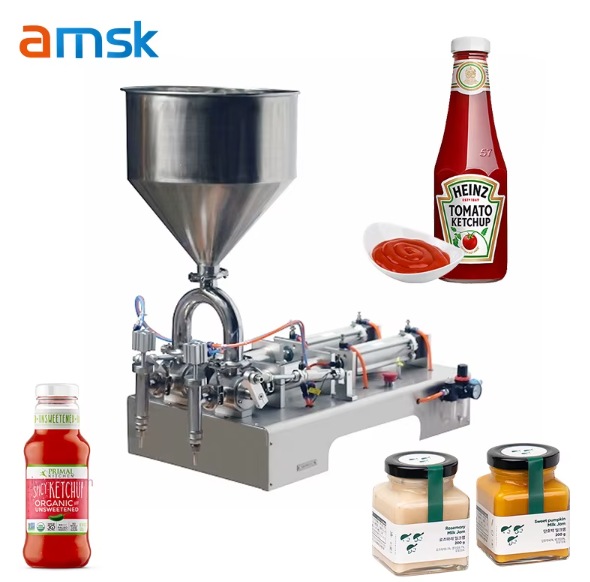
Piston fillers offer really accurate volume control across a wide range of products including things like ketchup, lotions, and even those thick pharmaceutical ointments that sit between 5,000 and 50,000 cP viscosity. These machines work with a sealed cylinder system combined with what's called a positive displacement valve mechanism. They can hold onto about plus or minus 0.5% accuracy despite all sorts of challenges like particles floating around, trapped air bubbles, or when the material gets denser as it moves through the process. This makes them much better at handling viscous materials compared to traditional gravity feed or overflow systems which struggle with consistency issues. The way these piston fillers are built also means they complete each filling cycle quicker than vacuum based alternatives while wasting less product when switching between different products or starting up operations. When dealing with particularly harsh abrasive pastes though, manufacturers often install special wear resistant parts made from hardened stainless steel or ceramic options that actually last around 40% longer before needing replacement. For companies working in food processing or pharmaceutical manufacturing environments, regular maintenance schedules for replacing seals is still pretty important if they want to keep their facilities compliant with sanitation standards throughout production runs.
Peristaltic and Lobe Pump Fillers: Optimal for Shear-Sensitive or Low-Viscosity Liquids
When it comes to maintaining product quality, peristaltic and lobe pump fillers stand out particularly well for products that can't handle rough treatment. Think about things like sensitive emulsions, dairy products, plant based drinks, or those super clean pharmaceuticals with viscosity under 1,000 cP. Peristaltic systems work by keeping fluids completely contained inside disposable tubes, so there's no risk of contamination when switching between different flavors or formulas. This really matters for small batch producers who need flexibility without compromising safety standards. Lobe pumps create about 30 percent less shear force compared to other types like rotary vane or gear pumps. That makes all the difference for keeping proteins intact in milk products and stopping ingredients from separating in cosmetic formulations. Both pump types also work great with automated cleaning processes (CIP/SIP), which cuts down on cleaning time by roughly 25% compared to having to take everything apart manually. Plus their smooth and steady flow helps prevent problems like unwanted foam formation, air bubbles getting mixed in, or valuable ingredients breaking down over time.
Liquid vs. Paste Filling: Key Operational Differences in Fill Machine Automatic Design
When it comes to filling products, whether they're liquids or pastes makes all the difference in how engineers design automatic fill machines. Water, vinegar, and those lighter oils just pour right out under gravity, so manufacturers can use fast rotating fillers with basic volume controls or time-pressure systems that handle over three hundred bottles every minute easily. But things get trickier with thick stuff like toothpaste, adhesives, and heavy creams. These need special equipment such as pistons or augers that actually force the product into containers rather than relying on gravity alone. Because of these different requirements, there are basically four main ways operations differ when dealing with these contrasting materials.
- Flow Dynamics: Liquids rely on gravity-fed nozzles; pastes demand pressurized delivery and wider nozzles to prevent clogging and ensure complete discharge.
- Speed Tradeoffs: Liquid fillers operate at 3–5Å the speed of paste systems due to inherent flow resistance and slower valve actuation cycles.
- Cleanability: Paste residues adhere strongly to surfaces, necessitating robust CIP protocols with scraper blades in hoppers and heated rinse stages—especially for high-fat or high-sugar formulations.
- Accuracy Variance: Piston-based paste fillers hold ±0.5% accuracy across viscosity shifts without recalibration; liquid fillers may require real-time density or temperature compensation for temperature-sensitive products like syrups or ethanol blends.
Shear sensitivity further refines selection: lobe pumps preserve emulsion stability in premium cosmetics, while peristaltic pumps meet sterility requirements in biologics manufacturing.
Beyond Viscosity: Critical Factors for Reliable Fill Machine Automatic Integration
While viscosity dictates core mechanism choice, long-term reliability hinges on three interdependent factors: container handling, sanitary compliance (CIP/SIP), and product sensitivity.
Container Handling, Sanitary Requirements (CIP/SIP), and Product Sensitivity
The shape of containers really matters when it comes to setting up machines. Paste products typically need those big mouth jars that call for stronger grippers and slower movement through the line. Liquid bottles with narrow necks are different though they require careful alignment at the neck area to work properly. Keeping things clean is absolutely essential in food production and pharmaceutical manufacturing. Automated cleaning systems like CIP and SIP help cut down on contamination risks and downtime from stoppages. Manufacturers who neglect proper sanitation face serious financial hits too. According to a study by Ponemon Institute from last year, poor hygiene practices cost companies around $740k each year just from product recalls. When dealing with delicate materials such as emulsions, probiotics, or substances that break down under heat, special pumps designed to minimize shear forces become critical. These pumps protect against problems like texture changes, unstable microbes, or loss of effectiveness in the final product.
| Factor | Liquid Filling Impact | Paste Filling Impact |
|---|---|---|
| Container Type | Requires precision neck guides and tight-tolerance bottle chutes | Needs wider nozzle clearance, reinforced hopper discharge, and torque-stable capping integration |
| Sanitation (CIP/SIP) | Mandatory for low-acid, ambient-stable products to prevent microbial growth | Critical for high-fat, high-protein pastes prone to biofilm formation in static zones |
| Sensitivity | Prioritizes avoidance of aeration, foaming, and oxidation | Focuses on minimizing shear-induced separation, particle settling, or rheological degradation |
Seamless integration demands aligning these elements with production goals. For instance, high-care facilities prioritize CIP-capable fill machine automatics to maintain hygiene without halting lines—as outlined in best practices for production line integration.