
 EN
EN
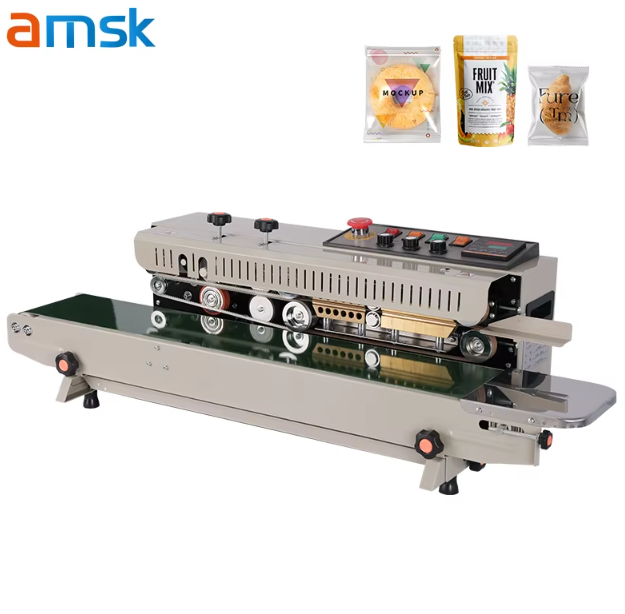
How a Band Sealer Enables True Continuous Bag Sealing
True continuous sealing is a defining advantage of modern band sealer systems. Unlike intermittent methods that start-stop between cycles, these systems synchronize material transport with thermal activation—moving pre-filled bags through sealed heating zones without interruption.
Conveyor-integrated thermal sealing: Synchronized motion, dwell time, and heat transfer physics
For continuous operation to work properly, the conveyor belt speed needs to sync just right with when those heating elements kick in. When the bags move along, these heated bands press against the packaging material at specific pressures set by calibration. How long each bag stays under heat (called dwell time) has to match exactly with how fast things are moving down the line so the plastic actually bonds properly. The heat gets transferred through conduction as it passes through different layers of the bag itself. That means we need consistent heat throughout the whole sealing area too. All these physical factors working together is what keeps everything flowing smoothly from when materials go in all the way until they cool down at the end.
Key operational parameters: Temperature, speed, pressure, and cooling control for seal integrity
Balancing four variables is essential for hermetic seals:
- Temperature: Must melt interfacial polymers without scorching substrates (e.g., 130–180°C for common PE films)
- Speed: Higher line rates reduce dwell time, necessitating compensatory temperature or pressure adjustments
- Pressure: Insufficient force causes weak seals; excess thins materials (5–8 N/cm² typical range)
- Cooling: Immediate quenching sets molecular bonds before tension release
Deviations beyond ±5% in any parameter increase seal failure risks by ≥15%. Modern control systems maintain these thresholds at throughputs exceeding 60 bags/minute.
Performance Advantages of Band Sealers in High-Volume Production
Throughput gains: 3.2× faster than manual/intermittent methods — validated in FMCG packaging lines
Band sealers really boost production speeds because they cut out those annoying stop-and-go moments that happen with manual or semi-automatic sealing processes. When integrated into conveyor systems, these machines keep everything moving non-stop, matching the timing of each bag's movement with just the right amount of heat applied at the seal point. We've seen this work wonders in actual FMCG factories where some models can handle over 120 bags every minute, which is roughly three times quicker than older methods according to last year's Packaging Efficiency Review. The speed comes from better heat distribution across the sealing surface plus rapid cooling that locks in quality. For snack manufacturers, drug companies, and producers of dried foods, this means getting more done with their existing equipment without creating bottlenecks elsewhere in the plant. And workers spend about 40% less time adjusting things manually since the bags stay perfectly aligned throughout the whole sealing process.
Consistent seal quality: <1.2% failure rate at 60–120 bags/min (ASTM F88-22 compliant)
Band sealers achieve excellent seal integrity thanks to their ability to precisely modulate temperature and maintain consistent pressure during operation. These machines come equipped with advanced PID controllers that can tweak heat settings every 0.1 seconds, making them suitable for a wide range of materials from PE laminates to various types of foil barriers. Thermal sensors work in real time to keep melting temperatures uniform throughout the process, resulting in nearly perfect hermetic seals with failure rates below 1.2%. This kind of performance meets the latest ASTM F88-22 requirements regarding both peel strength and burst resistance. An important feature is the built-in cooling zone which hardens the seals right before releasing the bags, so there are no wrinkles or spots where the seal might be weaker. Compared to traditional impulse sealers, this level of reliability cuts down on product waste by about 18%, all while staying within the stringent guidelines required for food safety applications and medical packaging needs.
Material Compatibility and Packaging Flexibility of Band Sealers
Sealing diverse heat-sealable substrates: PE, PP, PA-PE laminates, aluminum foil, kraft paper, and coated cardboard
These sealing units come equipped with advanced thermal controls that let them handle all sorts of different materials without slowing down production speeds. The machines regulate temperatures pretty precisely around the 100 to 200 degree Celsius range and adjust pressures so they can switch effortlessly from sealing regular polyethylene snack bags to specialized polypropylene medical pouches or even tricky PA-PE laminated films used in food packaging. What makes these band sealers really stand out is their ability to work with unconventional materials too. They handle metallized aluminum foil commonly seen in coffee packages just as well as coated cardboard inserts that go inside those fancy rigid boxes we see on store shelves. The secret lies in their adaptive dwell time settings which keep seals intact regardless of how thick or thin the material happens to be ranging from super thin 0.03mm foil up to much thicker 0.8mm reinforced kraft paper. This matters a lot because it stops leaks in products that are sensitive to moisture or air exposure. And best of all, companies don't need extra sealing machinery since these units already meet the ASTM F1921 standards for proper barrier protection requirements.
ROI Drivers: How Band Sealers Reduce Downtime and Optimize Labor Costs
The return on investment for band sealers happens pretty quickly because they tackle those big money drains in production lines: unexpected downtime and all those wasted hours from manual labor. These machines run nonstop so there's no waiting around like with those old intermittent sealing setups. We've seen facilities hit around 95% uptime when running at full capacity. The real magic happens when these sealers work hand in hand with other packaging gear throughout the plant. Automated sealing means factories need about half as many workers at sealing stations compared to what they used to require manually. That frees up staff to focus on actually important stuff rather than just standing there pressing buttons. Plus, the precise temperature control systems cut down on material waste caused by bad seals, which saves a ton on materials over time. Most manufacturers find themselves getting their money back within three to nine months after installing these systems. And once that initial cost is covered, the ongoing savings just keep stacking up month after month.