
 EN
EN
Core Principles of Automatic Flow Pack Technology
Form-Fill-Seal Mechanics: How Flow Pack Machines Create Sealed Packages
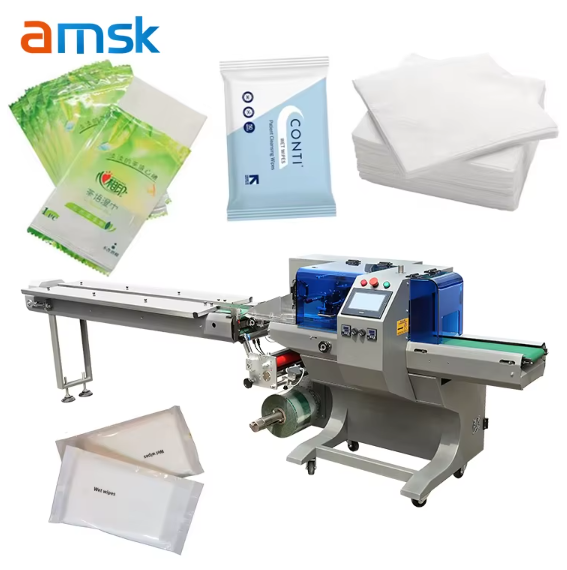
Flow pack machines work automatically using FFS technology to make those tight sealed pouches we see everywhere. The process happens in three main steps first the machine unwinds film from a big roll, then shapes it into a tube around whatever product needs packaging through this special collar that ensures proper formation. Next comes the sealing part where the film gets sealed down the length of the tube, followed by another set of seals across each individual item made possible by these fancy horizontal jaws controlled by servos. At the end there are fast cutting blades that separate each finished package at speeds over 120 per minute. What makes these machines so versatile is their ability to handle everything from small candy pieces weighing just 10 grams all the way up to heavier stuff like hardware parts reaching 500 grams. Operators can adjust how tight the film stays during processing and fine tune the sealing settings depending on what kind of material they're working with whether it's standard polyethylene, tougher polypropylene or those specialized barrier laminates needed for certain products.
Fully Automatic vs. Semi-Automatic Flow Pack: Key Operational and Output Differences
The fully automatic systems hit around 92% efficiency when running end to end with robots taking care of everything from feeding materials to forming, filling, sealing and cutting all without needing any hands on work. These machines can handle as many as 3,400 packages each hour straight through. According to Packaging Digest from last year, predictive maintenance keeps downtime down to just under 18 minutes per week. For companies looking at costs, semi automatic versions still need someone to load them manually but come in at about 78% cheaper initially while managing peak speeds of 1,200 packages per hour. What both types have in common is their use of AI powered vision systems that keep defects well below 0.2%. When running non stop for five days straight, the full automation really shines, delivering almost double the output thanks to better control over film tension and sealed joints. This makes all the difference in operations where volume matters most and there's no room for error.
Matching Your Product and Packaging Requirements to Flow Pack Capabilities
Product Dimensions, Weight, and Sensitivity: Impact on Feed System and Sealing Design
What kind of products we're dealing with really determines what machines we need to specify. For things that are delicate like baked goods or electronic components, we typically go with gentler options such as vibratory feeders or belt transfer systems so nothing gets damaged during processing. When handling items heavier than 500 grams, stainless steel conveyor belts become necessary along with stronger sealing mechanisms to maintain production speed and ensure proper seals. Larger products that exceed 300 millimeters in length usually require special forming attachments and longer sealing periods. According to recent findings published in Packaging Digest last year, around two thirds of all packaging issues come down to simple mismatches between what the product needs and what the machinery can actually handle. That's why it's so important to double check real world measurements against the technical specs listed for each machine, particularly looking at minimum pouch sizes and maximum load capacities.
Film Type Compatibility and Seal Integrity Standards for Common Packaging Materials
Choosing the right film has a big impact on what temperature we need for sealing, how long the dwell time should be, and even what kind of jaw design works best. Most polypropylene films will seal just fine around 120 to 150 degrees Celsius, but those polyester laminates need much hotter temps, somewhere between 160 and 190 degrees to get that FDA approved seal quality. When dealing with products sensitive to moisture such as dried food items or medications, it's really important to go for barrier films that keep water vapor transmission rates below 0.5 grams per square meter over 24 hours. Testing seal strength according to ASTM F88-21 standards is pretty standard practice these days, aiming for around 1.5 to 2.5 Newtons per 15 millimeters for products ready to hit store shelves. And let's not forget about recyclable mono material films which many places are now requiring due to EPR laws. These often call for special sealing jaws to maintain at least 98 percent integrity when running at top speed during production.
| Material Property | Flow Pack Requirement | Industry Standard |
|---|---|---|
| Film Thickness | 30–150 micron range | ISO 4593:2011 |
| Seal Strength | ≥1.5N/15mm | ASTM F88-21 |
| Oxygen Barrier | <15cc/m²/day (OTR) | ISO 15105-2 |
Aligning Flow Pack Throughput and Automation Level with Production Goals
The choice between different throughput levels and how much automation to implement really depends on three main factors: how consistent the production volume is, what kind of workforce strategy makes sense, and where the company sees itself growing in the future. For companies running at high volumes, getting machines that can handle around 120 to 200 cycles per minute becomes essential if they want to keep up with demanding delivery schedules. Businesses that operate at lower or moderate volumes often find semi-automatic systems work best when dealing with products that change frequently across different stock keeping units. When it comes to fully automated production lines, these setups can cut down labor expenses by almost 80 percent while also reducing unexpected downtime thanks to built-in monitoring systems that predict when maintenance might be needed. What's particularly valuable about modular platforms controlled through programmable logic controllers is their ability to expand capacity by roughly 25 to 40 percent without having to replace entire production lines. This flexibility makes such systems great investments for companies looking to scale operations over time while still maintaining good returns on investment.
Maximizing Long-Term Value: Integration, Scalability, and Support for Your Flow Pack Investment
PLC-Controlled Integration and Modular Expansion for Future Line Upgrades
Today's flow pack machines depend heavily on PLC (Programmable Logic Controller) systems to work together smoothly with fillers before them, labelers after them, and those big MES systems in the factory. The controllers let operators tweak things on the fly like how tight the film is, how much heat goes into sealing, and how fast everything moves along the line, all while keeping track of where each product goes and managing different production recipes. The modular setup means companies can upgrade step by step instead of doing a complete overhaul every time. Want to add automatic film changing? Inline cameras for quality checks? Robotic boxes? Just slot those features in as business needs change. No need to shut down whole production lines when bringing out new products or increasing output levels, which saves money and keeps the factory running without unnecessary downtime.
OEM Service Network, Spare Parts Availability, and Lifecycle Cost Considerations
Having a good OEM service network isn't just nice to have it's essential if facilities want to stay operational. Plants that work with local certified techs see repairs happening about 67% quicker according to industry data from 2023. When looking at manufacturers, companies should really focus on those who can send out replacement parts the same day especially when dealing with critical components such as sealing jaws, drive belts, and those tricky film tension sensors that often cause downtime issues. The total cost picture goes way beyond what someone pays upfront for equipment. Energy costs alone take up around 28% of everything spent over time, while regular maintenance eats into another 19%, and being able to adapt to upgrades adds another 15%. To cut down on expenses, many businesses are turning to variable speed drives which save power, investing in smart monitoring systems that alert them before problems happen, and opting for machines built with modular parts so they can easily swap things out later. Stainless steel builds, easy access points for cleaning and servicing, plus keeping performance losses below 2% each year means products keep meeting quality standards and passing inspections throughout their entire working life.