
 EN
EN
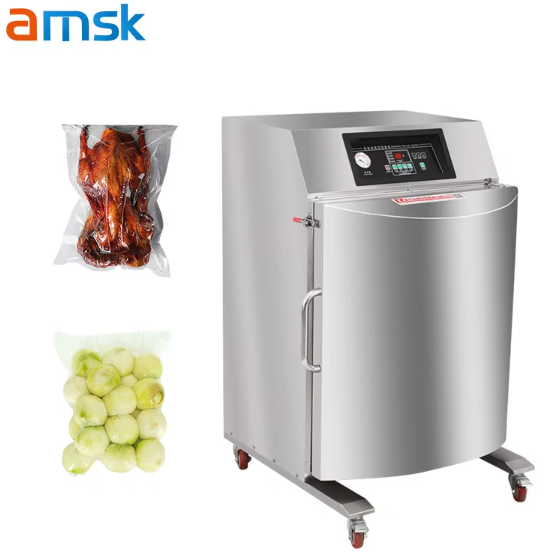
Maximizing Production Efficiency with Automatic Vacuum Packing Machines
Increased throughput and faster cycle times in high-volume production
Vacuum packing machines that run automatically can crank out around 60 packages every minute, which is roughly 240% quicker than when people do it by hand. This means factories can keep up with growing orders without needing bigger spaces for their equipment. The reason these machines work so well? They've got conveyor belts that sync up perfectly with adjustable pressure settings, keeping everything accurate even during those long overnight shifts. Take frozen food companies as an example. With these machines running full tilt, they could pack nearly 12 thousand extra boxes each day shift alone, making a huge difference in warehouse logistics and delivery schedules.
Reducing labor costs and workforce dependency through automation
A recent look at how much money companies save when they automate shows something interesting: sealing and gas flushing machines cut down on labor needs by around two thirds in meat processing plants. When workers don't have to handle bags manually or do all those quality checks themselves anymore, plant managers can move people into oversight positions instead. Plus, there's less need for overtime pay which saves money too. Take one poultry operation for example they spent roughly eighteen grand less every month on packaging labor once they installed those robotic tray loaders. Makes sense really, since machines just work faster and more consistently than humans ever could.
Lowering operational expenses over time with consistent performance
Energy-efficient vacuum pumps in modern machines consume 23% less power than previous-generation models, while predictive maintenance features prevent $740k in annual downtime losses (Ponemon Institute, 2023). The table below illustrates how automation drives cost optimization:
| Efficiency Factor | Impact | Annual Savings |
|---|---|---|
| Reduced energy use | 18-25 kWh savings per 1k packages | $32,000 |
| Minimal product rework | 0.2% defect rate vs 1.8% manual | $410,000 |
| Automated inventory sync | 98% material utilization rate | $85,000 |
These compounding savings enable food manufacturers to achieve ROI within 14–18 months, even when accounting for initial equipment investments.
Extending Shelf Life and Ensuring Product Quality Through Automated Sealing
Oxygen Removal and Spoilage Prevention in Vacuum Packaging
Vacuum packing machines can suck out nearly all the oxygen from sealed packages, which stops aerobic bacteria from growing and prevents oxidation reactions that cause food to go bad. When oxygen levels drop below half a percent, these systems really slow down spoilage for things like meat and cheese, sometimes extending shelf life three to five times longer than regular packaging methods. According to some research published last year on food storage techniques, fruits and vegetables kept in vacuum seals maintained almost twice as much vitamin C over a month period compared to conventionally stored counterparts, showing just how well this method preserves nutritional value in packaged foods.
Moisture Control and Microbial Growth Inhibition for Food Safety
When it comes to keeping things fresh, automated sealing systems work wonders at maintaining humidity below that critical 0.3 water activity mark where most molds and bacteria just stop growing altogether. The level of control really makes a difference for food manufacturers dealing with all sorts of moisture problems. Think about those stale chips or clumpy powdered mixes nobody wants. Fish and poultry processing plants have seen some impressive results too. According to recent FDA data, these facilities report around a 70% drop in microbial contamination when using proper humidity controls. Plus, freeze dried foods stay nice and crunchy instead of turning into mushy messes on store shelves.
Consistent Sealing Performance Preserving Freshness and Appearance
Today's sealing equipment gets pretty close to flawless performance with around 98-99% integrity thanks to those laser guided temperature and pressure adjustments. These systems stop those tiny leaks which are the real culprits behind freezer burn and moisture loss in stored products. Take one commercial bakery operation for instance they found their automated vacuum packaging system bumped up croissant shelf life dramatically from just 7 days to nearly a month without needing any chemical preservatives. What's really impressive is how these machines keep that delicate flakiness intact along with those beautiful golden colors that so often get lost when workers try to do it manually under time pressure.
Integrating Smart Technology: IoT and Data Analytics in Vacuum Packaging
Real Time Monitoring and Quality Assurance with IoT-Enabled Machines
The latest generation of automatic vacuum packers now come with built-in IoT sensors that track oxygen levels, check how well seals hold up, and monitor pressure throughout the process. According to research published in the 2025 Industry 4.0 Packaging Journal, these machines cut down on quality issues by about a third when compared to old fashioned manual checks because any problems show up right away and alert workers instantly. The whole system stays within food safety regulations such as HACCP requirements too. Meat processors especially benefit since they can keep production going at over 120 packages per minute without sacrificing safety standards. Some plants report fewer recalls and better shelf life for products packed this way.
Predictive Maintenance and Remote Diagnostics for Minimal Downtime
IoT integration shifts maintenance from reactive to predictive strategies. Vibration sensors and thermal imaging identify worn components before failures occur, cutting unplanned downtime by 27% in frozen food plants. Remote diagnostics allow technicians to resolve 65% of software-related issues without on-site visits, minimizing production interruptions during critical runs.
Performance Optimization Using Sensor Data and Cloud-Based Analytics
Aggregating data from multiple machines reveals optimization opportunities invisible to standalone systems. Machine learning algorithms analyze 12+ variables—including ambient humidity and product density—to auto-adjust sealing parameters. Facilities using these insights report 19% faster cycle times and 8% energy savings annually compared to non-connected models.
Balancing Connectivity Benefits with Cybersecurity Considerations
While IoT unlocks efficiency gains, encrypted data transmission and role-based access controls are critical. A 2024 automation survey showed 42% of packaging breaches originated from unpatched IoT devices, emphasizing the need for regular firmware updates in networked environments.
Calculating ROI: Upfront Costs vs. Long-Term Gains in Automation
Cost savings from reduced labor and minimized material waste
The Food Processing Automation Report from 2023 shows that automatic vacuum packing machines can cut down on labor costs anywhere between 40 to maybe even 60 percent when compared with old fashioned manual packaging setups. These machines take care of all those boring repetitive jobs such as placing products just right and making sure they seal properly. Plus, their fancy sensors help cut down on wasted materials because they use exactly the right amount of film each time. Take for instance a company that makes car parts somewhere in Ohio last year. After installing these new systems, they managed to slash their plastic film waste by around 28% over about half a year thanks to some clever algorithm adjustments they made to how materials were used.
Break-even analysis for automatic vacuum skin packaging systems
The typical ROI formula for automation projects helps quantify payback periods:
| Cost Factor | Average Investment | Annual Savings Potential |
|---|---|---|
| Equipment & Installation | $120k - $250k | $55k - $90k |
| Labor Reduction | N/A | $48k - $72k |
| Material Efficiency | N/A | $15k - $30k |
Most operations recoup initial investments within 18–24 months when implementing high-speed vacuum packaging systems, particularly in 24/7 production environments where consistent throughput offsets capital expenditure.
Case study: Fresh meat preservation in commercial settings
A mid-sized beef processor achieved a 14-month ROI after adopting automatic vacuum packing machines, reducing:
- Packaging labor costs by 62% ($82k annual savings)
- Product shrinkage from 4.2% to 1.6% through oxygen-level consistency
- Customer returns by 38% via improved seal integrity
This enabled expansion into distant markets previously restricted by shorter shelf-life constraints, demonstrating how automated sealing reliability directly translates to revenue growth.